
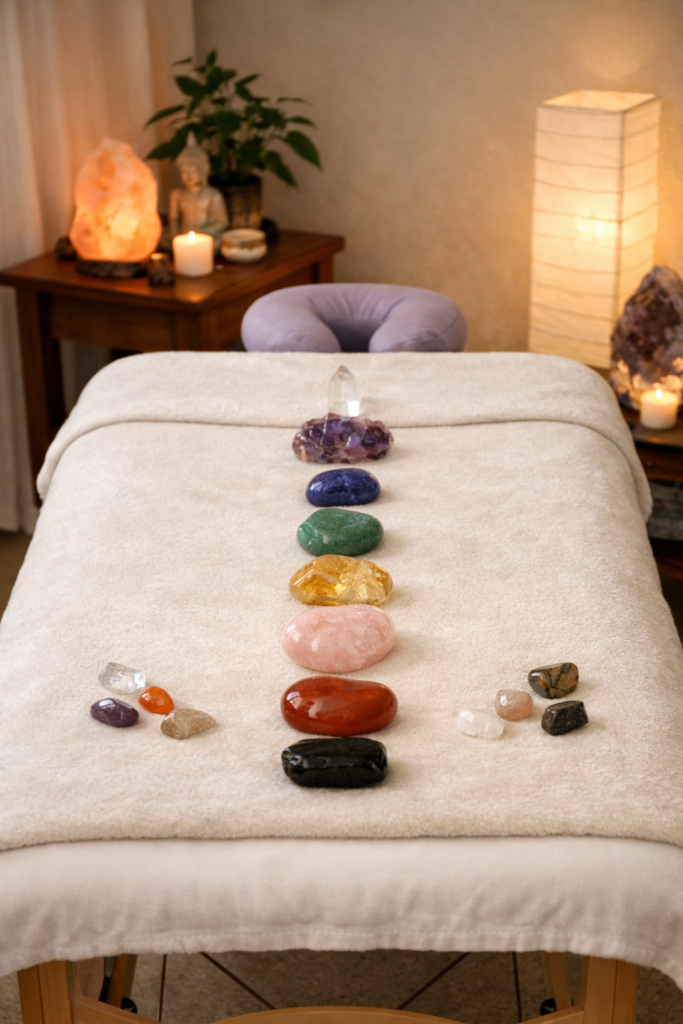
Reiki
What is Reiki? A Guide to Energy Healing
The History of Reiki
Reiki is a form of energy healing that originated in Japan in the early 20th century.
It was developed by Mikao Usui, a spiritual teacher who, through meditation and deep personal exploration, discovered a way to channel universal life force energy for healing.
The word Reiki itself translates to:
“Rei” -universal
“Ki” -life energy
This life energy flows through all living things and when it is balanced and flowing freely, we tend to feel calm, peaceful and aligned. When blocked or depleted, we may feel stressed, anxious, on edge or unwell.
Reiki is passed down through teachers and students and over time it has spread across the world, evolving into a deeply loved complementary therapy used for relaxation, emotional support, and balance.
How Does Reiki Work?
Reiki works on the belief that energy flows through the body, much like your breath or blood and during a Reiki session, your practitioner channels this universal energy and gently directs it to where it is needed most.
This is usually done through light touching the body or by hovering hands their hands just above.
Rather than “fixing” anything, Reiki supports your body’s natural ability to restore balance. It works intuitively, meaning the energy flows to the areas that need it; whether that’s physical tension or pain, emotional heaviness, or mental overwhelm.
It’s subtle, but powerful in the way it creates space for healing.
Understanding the Chakras
In Reiki, we often work with the body’s energy centres, known as chakras.
The word chakra comes from Sanskrit and means “wheel”– describing the spinning energy points within the body.
There are seven main chakras, each linked to different physical, emotional, and spiritual aspects of your wellbeing:
Root Chakra– safety, stability, grounding
Sacral Chakra– creativity, pleasure, emotions
Solar Plexus Chakra– confidence, identity, personal power
Heart Chakra– love, compassion, connection
Throat Chakra– communication, truth, expression
Third Eye Chakra– intuition, insight, inner wisdom
Crown Chakra– spirituality, connection to something greater
When these energy centres are balanced, we tend to feel aligned and peaceful.
When they’re blocked or overactive, we might notice emotional imbalance, tension, or a sense of being “off.”
During a Reiki session, energy flows naturally to the chakras that need attention, helping to gently clear, balance, and restore harmony across your whole system.
What to Expect in Your Reiki Session
Your Reiki session is a space for you to slow down, feel calmness, and be completely yourself without pressure.
When you arrive, your practitioner may begin with a gentle conversation about how you’re feeling, what you would like support with or your experience with Reiki as a whole. This helps create a sense of comfort and connection.
You’ll then lie down fully clothed on a treatment bed, often with soft blankets, calming music, and low lighting to help you relax.
During the session:
Hands are placed lightly on or just above the body.
You don’t need to do anything at all; you can talk, rest, or even fall asleep.
Just like you, each session is unique.
Some people feel sensations, others feel very little, but the energy is still working in the background.
Afterwards, you will be gently brought back and if you’d like, share any reflections from the session.
Many people describe their Reiki session as:
*A deep calm within the chaos of their life
*A feeling of warmth or gentle waves that flow over and through them
*A sense of emotional release or clarity
*A quiet and grounded stillness that lasts well beyond the treatment
What to Do After Your Reiki Session
Reiki doesn’t end when the session finishes, it often continues to gently unfold over the next few hours or days.
After your session, it’s important to:
*Drink plenty of water to support your energy flow
*Rest if you need to
*Notice how you feel emotionally and physically and reflect on these feelings
*Be kind to yourself
*After your session you might feel:
*Lighter or clearer
*More emotional than usual (this is normal and part of release)
*Calm, grounded, and more present
Try to avoid rushing straight back into stress or overstimulation if you can.
Give yourself permission to stay in that soft, supported space for a little longer.